


Beneath every step, there is ground. Not just the visible surface, but strata upon strata of support be it human, more-than-human, geological, ancestral, or biological.
Robin Wall Kimmerer reminds us that “The land knows you, even when you are lost.”
For most of our history, our relationship with that ground was intimate. We walked barefoot on soil we knew. We slept under the same stretch of sky our ancestors had named and navigated. We lived in small, interdependent groups where every face was familiar, every voice known.
Even now after centuries of migration, urbanisation, and technological acceleration the architecture of our brains is still shaped by those millennia. We are, at our core, village creatures. We orient best in webs of relationship; in places we can know with our senses.
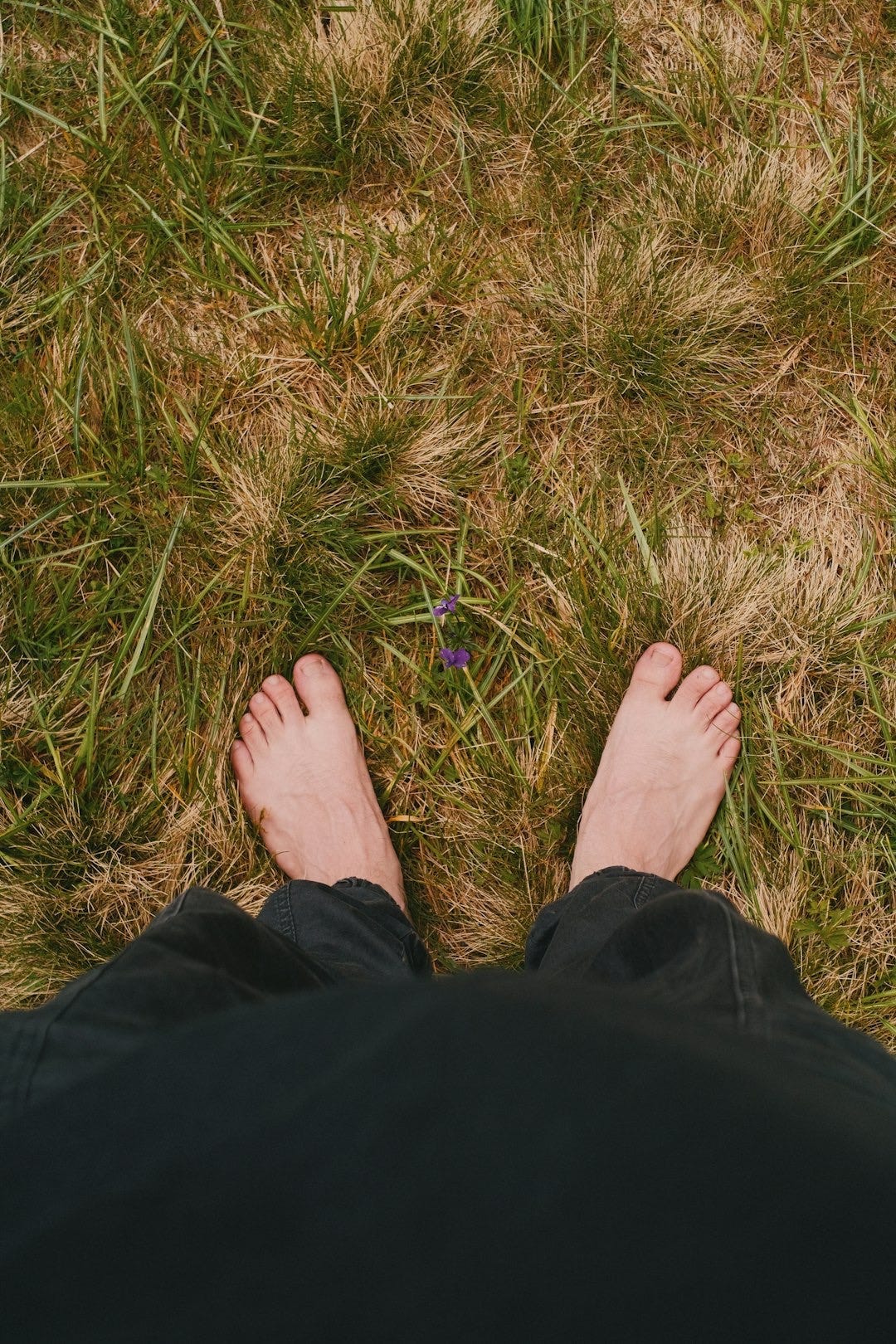
Ground as support and challenge
David Whyte describes ground as “what lies beneath our feet… the living, underlying foundation that tells us what we are, where we are, what season we are in.”
Ground is not just the soil we stand on. It is the place we already inhabit, whether or not it feels comfortable, and whether or not we would have chosen it. It is both gift and friction: the soil of nourishment and encouragement and the place where difficulty, grief, and challenge confront us.
To “come to ground” is to stop searching for perfect conditions and meet the living ground as it is. Not as resignation, but as an end to the exhausting search for better soil elsewhere.
Grounding is not retreat. It is balance, matching steadiness with responsiveness. We become firm enough to act, and supple enough to shift when the living ground itself changes beneath us.
The village as relational ground
“We were never meant to live without the village. Without it, we live in exile, estranged from the web of relationships that keep us alive.” Francis Weller
For millennia, survival and meaning were woven into the fabric of the village: small, interdependent groups where belonging was embodied. Our nervous systems, our stress responses, even the pattern of our dreams still carry that inheritance.
The village is not nostalgia, it is biology, and it is more-than-human. Trees, rivers, birdsong, ancestors are part of the mesh of belonging that steadies us.
Even in scattered, mobile lives, the longing for woven belonging pulses in us. It is why we ache when we feel rootless. It is why we find relief when someone looks us in the eye and says, “I see you.” To stand in our ground, then, is to remember not only the soil, but the web of kin that holds it in place.
The lineage of soil
Ground has a lineage. The soil beneath your feet is time made tangible: layers of forest, ocean, bone, ash, pollen. It also holds the residues of our age including microplastics, chemical traces, and invisible toxins. Ground is never pure, it is alive, mixed, and layered with both nourishment and grief.
As are we, our bodies carry ancestral traces: hunger and plenty, danger and joy, migrations, silences, songs. Our microbiomes are entangled with the land we inhabit: its food, water, dust, and weather shaping our very moods and immunity.
Place and person co-author one another. The ground beneath you, and the lineage within you, are woven in the way you think, feel, and choose.
Roots as fieldcraft
Roots remember. They remember deep time. They remember kin. They remember grief. They remember contamination. And roots don’t only ground us — they ground the field. In ecosystems, roots share water and nutrients. They signal danger. They create stability not just for the tree, but for the forest.
So too for us.
Our grounding is never only individual. Our roots are how the field itself strengthens. This week, the invitation is not just to ground yourself, but to ground with: to sense how your roots entangle with others, how your rooting nourishes the soil you share.
Practice: Grounding in the Field
Notice your ground: Place your bare feet on the floor or soil. Feel what lies beneath. Acknowledge its layers, what is nourishing or contaminated, ancient or immediate.
Remember your lineage: Take a moment to name one ancestral thread that lives in you, and one belonging in the place where you stand.
Trace your roots outward: Who else is rooted here with you: human or more-than-human? Whose steadiness do you lean on? Who leans on yours?
Offer back: Choose one small gesture this week that nourishes the shared soil: tending the earth, offering kindness, strengthening relationship, sharing wisdom.
Want a printable version? You can purchase one here (opens into new window)
Roots remember. They remember forests and rivers, villages and migrations, joy and grief. They also remember plastics, industry, and silence. To stand on your ground is to be held by all of it. To be challenged by all of it and to know that whatever reaches upward will be shaped by what lies beneath.
Invitation: Share a Letter to the Hearth
If something arose for you, you are welcome to send a Letter to the Hearth. These letters are part of the larger conversation we’re tending, fragments of your story woven into this unfolding practice. Letters don’t need to be polished or certain. They can be incomplete, raw, or full of wonderings you haven’t yet untangled. Some letters will rest quietly between us. Some, with your blessing, may become part of future posts — a living archive of our collective unravelling.
This space isn’t a forum, but a series of quiet correspondences. If something stirs in you while reading — a memory, a question, a grief, a seed — you’re invited to write back via ‘Letters to the Hearth’. Some letters will find their way into future posts, if you’re willing to share. Others will rest quietly between us.
The comments are closed, but the conversation is alive.
The Art of Unravelling is offered as a gift, sustained by those who feel called to support the weaving. If you’d like to help tend the fabric of this work, you can contribute via the link below.